Can You Use the Same Transfer Sheet Over and Over Again
- Abode
- Industry news
- Sublimation Paper & Heat Transfer Paper: 13 Questions Answered
Sublimation Paper & Estrus Transfer Paper: thirteen Questions Answered

1. What is Transfer Press?
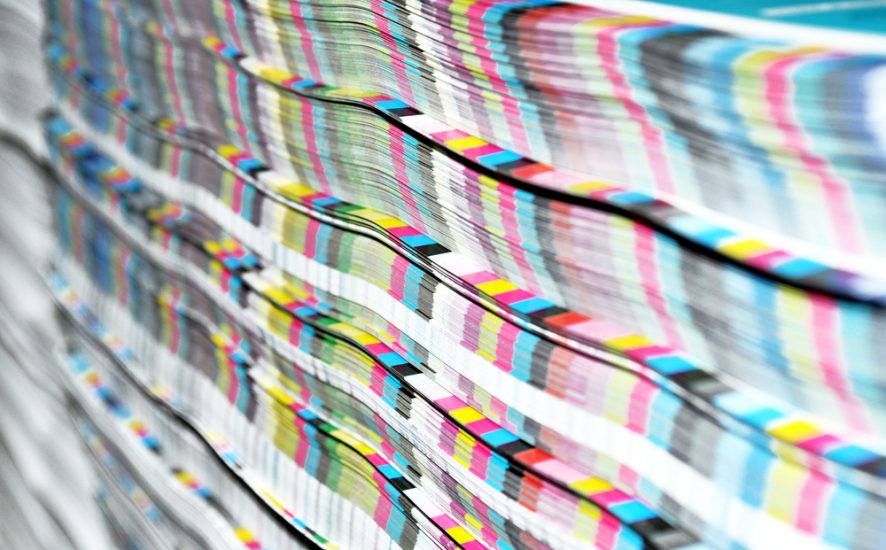
Transfer press describes two unlike types of press: Rut transfer press and sublimation. They both have their pros and cons, but they both tend to be more suited for dissimilar needs. There is still some ambiguity on sublimation and how it works, so we are going to take a look at the virtually ofttimes asked questions and attempt and provide a little more clarity.
2. What is Heat Transfer Printing?
Heat transfer press is done using a specialist paper that is called transfer paper. You can apply a standard inkjet or laser printer to print onto this newspaper with your normal inks. You then place the paper onto your vesture and use a heat press, or in some cases, you can use an iron, and pare away the paper.
Your design will then be stuck-on to your garment, and you lot will exist able to see the transfer. Yous can employ most oestrus transfer paper on a variety of fabrics, including virtually poly textiles and natural cotton. You tin can impress on both light and night coloured garments.

3. What is Sublimation?
Sublimation is a modernistic digital printing technique that is increasing in popularity. Search volume has increased by effectually 115% worldwide since 2004, co-ordinate to Google Trends. It uses sublimation paper and oestrus to print your pattern.
We suggest that y'all use this on fabrics that are 85% poly or more. This is because it is the poly fibres that open their pores to accept the dye. You tin can use a lower limerick, all the same, your colours volition exist affected. You'll end up with more of a 'vintage faded' look. Y'all can besides print on difficult surfaces with a poly-blanket, such as keyrings, jigsaws, mugs and so much more.
4. What is Sublimation Paper?
Sublimation transfer paper is a specialist paper that is used exclusively in sublimation printing. Made using a newspaper substrate, which is broadly based on a normal paper. A special coating added to the paper holds the dye sublimation inks. The coating includes around 35% silica and 5% binder, based on the weight of the newspaper when it's dry.
Sources: Patent Encyclopedia
5. How does Sublimation Transfer Press Work?
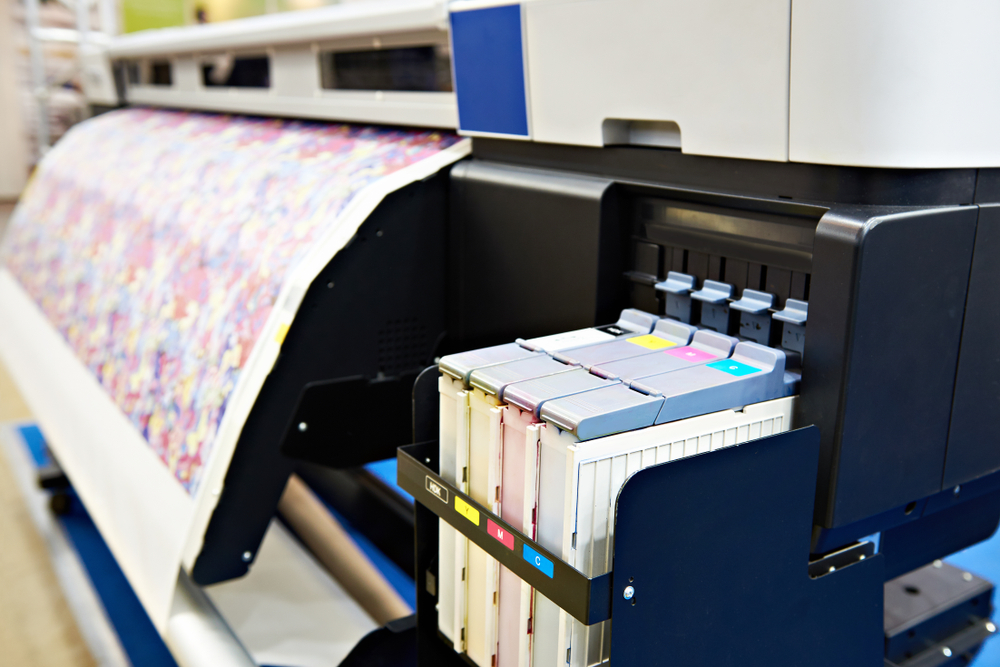
Sublimation doesn't use any liquid in the process. Inks heated from their solid-state on the sublimation paper, convert direct to a gas. Information technology is a printing method that bonds to poly fibres, and because the poly fibres have been heated, the pores expand. These open up pores then allow the gas into them, which then fuses to the cloth itself, before resuming its solid-state. This makes the ink role of the fibres themselves, rather than just a layer printed on the top.
6. What Are the Steps of Using Thermal Transfer Paper to make a T-shirt?
Sublimation is a ii-footstep process. Firstly, you lot need to impress your design onto the sublimation paper, using specialist sublimation dyes. The image would need to exist mirrored, but don't worry about that, Contrado does that for yous when you place your order, so all you need to practise is create your design equally you want it to look when information technology's finished.
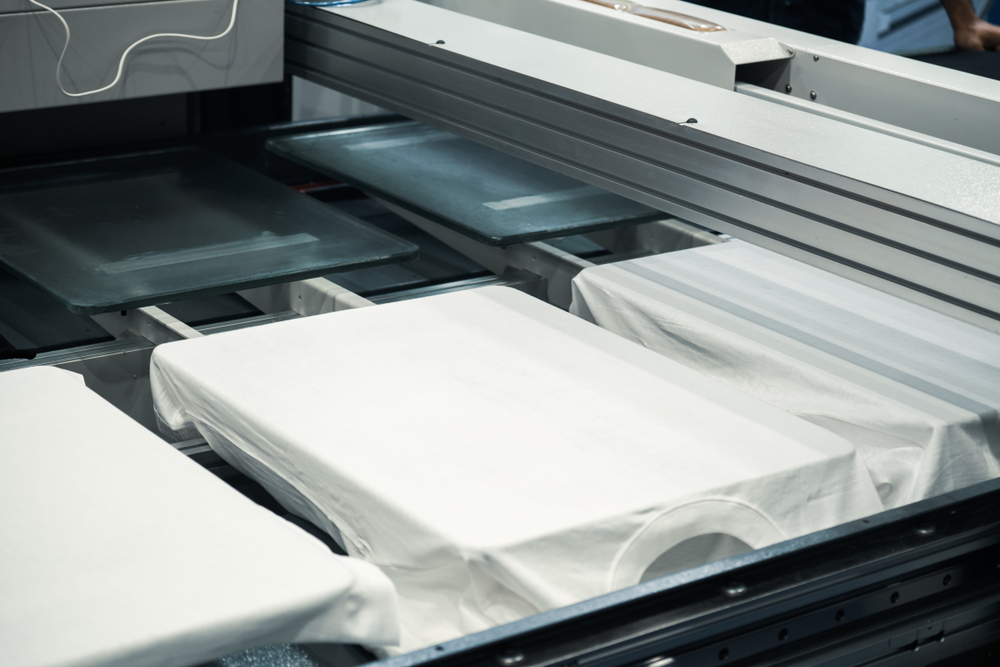
And then you lot need to press the design from your paper onto your t-shirt (or fabric or surface). This is done using a rut press which applies either heat and force per unit area, or heat and a vacuum. Once pressed, simply remove the transfer newspaper, and voila, your t-shirt is printed.
vii. Does Sublimation Newspaper Transfer onto Nighttime Cloth?
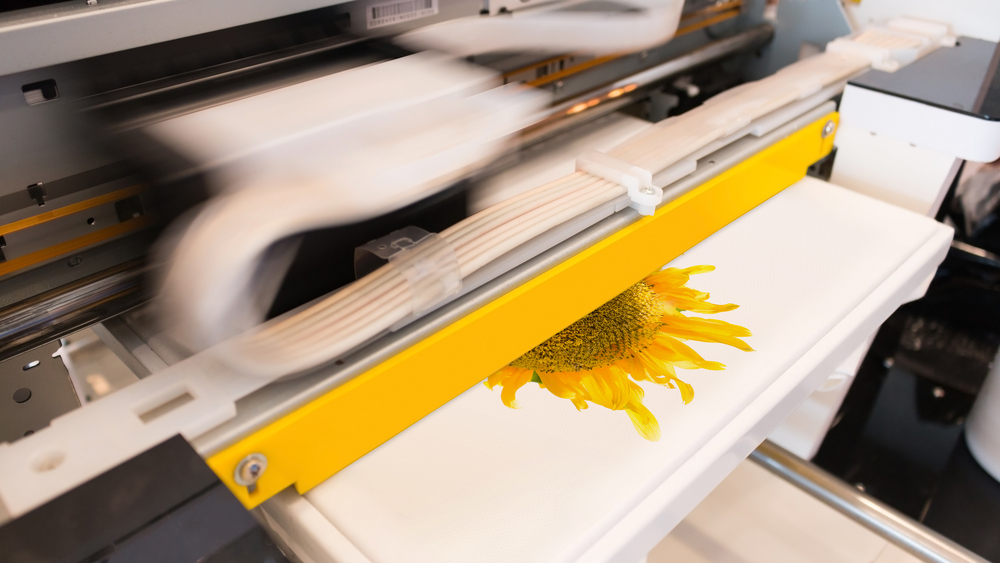
Sublimation is best suited to white or light-coloured fabric bases. You can use it on darker shades, even so, it will affect your colours. White ink is not used in sublimation printing. White parts of the design remain unprinted which shows the base of operations colour of the textile.
The do good of sublimation over estrus transfer printing is that there is a much broader range of colours. This means that you could impress your groundwork colour onto the fabric rather than employ a unlike coloured fabric, and because of the avant-garde press methods, the material would feel exactly the same.
8. Is heat transfer paper sensitive to humidity in the air?
Sublimation paper holds an enormous corporeality of moisture and humid air is non groovy for information technology. Exposure to humid air causes the sublimation paper to absorb it similar a sponge. This results in image haemorrhage, uneven transfers and colour shifting.
Heat transfer paper is also sensitive to humidity. The inkjet or laser printing is more than prone to dotting and colour bleeding if there is excessive wet in the paper, and as this class of printing applies a film, rather than beingness textureless, you may find that the transfer is not flat, or curls or peels at the edges.
9. Which is the right print side of the sublimation paper?
When working out which side to print on your sublimation paper, it is important that you impress your design onto the bright white side. If you order sublimation paper from Contrado already printed with your design, you will be able to tell which side is the right side.
You'll find that your colours look pale on the sublimation newspaper. This is completely normal and isn't what the finished press will look like. Once transferred to your medium your colours will come to life! Some other benefit of sublimation over transfer printing is that there is a much bigger range of colours.
10. Can thermal transfer paper be reused?
You can't reuse your thermal transfer paper, whichever type you use. Although with sublimation paper, you may detect that at that place is some ink remaining on the paper, it will non be enough to make a good-quality print.
With transfer newspaper, the iron's heat melts the plastic lining on the paper, which transfers the ink to the cloth, too as the plastic from the paper. This would be impossible to re-utilize.
11. What mistakes do you make when using a T-shirt transfer newspaper?
There are some mutual mistakes when it comes to designing your own t-shirts, other vesture and items.
- Printing on the incorrect side of the paper
- Applying likewise piffling pressure
- Applying as well much or also little oestrus
- Putting the incorrect side of the transfer to your cloth
- Incorrect positioning
- Non mirroring pattern*
- Press for too long (you tin can end up scorching or melting the paper)
- Using the incorrect kind of inks on the wrong paper
- Using the incorrect fabric (sublimation requires high poly pct)
*call up, if ordering through Contrado, nosotros will do this for you, it'south important that you don't exercise this step.
Nosotros always advise testing on a small piece first, to ensure that y'all get the right amount of oestrus and pressure, before printing your full design.
12. What are the Pros and Cons of Sublimation?
Pros
- Color is permanently transferred to the fabric
- No liquid in the printing process, immediately dry out
- Incredibly durable and super long-lasting
- Completely textureless design, fifty-fifty when all over
- Can be used on rigid products with poly-coating
- Prints full colours, perfect for photos and multifariousness
- Inks have skilful UV resistance as standard
- Self weeding (merely transfers the ink to the fabric)
Cons
- Not great for night coloured fabrics
- Requires a high poly content (85%+)
- More than expensive to set upwardly than transfer
thirteen. What are the Pros and Cons of Heat Transfer Press?
Pros
- Much cheaper to ready, tin can use dwelling printer
- Tin can exist used on 100% cotton fabrics
- Works with both light and dark garments
Cons
- Leaves a textured film on vesture
- Simply for apply on fabric, doesn't work on rigid products
- Much less durable and fades a lot with washing
- Can crack and peel over time
- Cannot iron design (although you can iron the rest of the wearing apparel)
- Not cocky weeding (yous need to cut your image out – peculiarly on nighttime fabric)
andersonkillaimpon.blogspot.com
Source: https://www.contrado.co.uk/blog/sublimation-printing-heat-transfer-paper-13-top-questions-answered/#:~:text=10.,make%20a%20good%2Dquality%20print.
0 Response to "Can You Use the Same Transfer Sheet Over and Over Again"
Publicar un comentario